Managing agent Joseph Gurvits named in Commons – an hour after MP attends ARMA round-table conference on tougher ethical standards

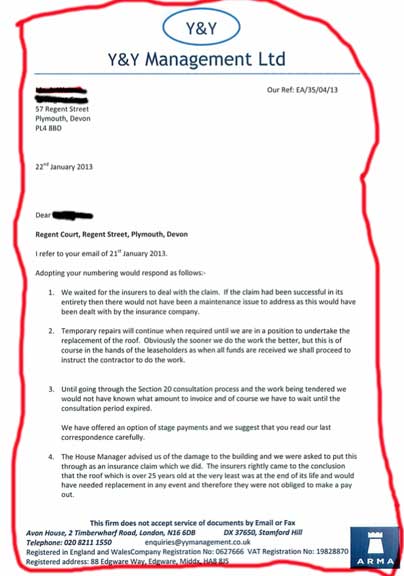
Regent Court in Plymouth, where pensioners are fighting London freeholder and managing agent Joseph Gurvits in a right to manage action

Regent Court in Plymouth, where pensioners are fighting London freeholder and managing agent Joseph Gurvits in a right to manage action

The behind-the-scenes concern of senior politicians over managing agent Joseph Gurvits broke into the open yesterday when he was named in the House of Commons.

Gurvits was named – without comment and together with Peverel and Tchenguiz – in a brief intervention in the rental housing sector debate yesterday by Sir Peter Bottomley, MP for Worthing West, who is concerned about the treatment of pensioners at two retirement developments in Plymouth.

Residents at Elim Court and Regent Court are locked in Leasehold Valuation Tribunal disputes with Gurvits, who is deploying the legal means available to frustrate their attempts to exercise their right to manage.

Housing Minister Mark Prisk replied: “I will look into those cases very carefully—I am aware of them—” but he would not intervene in the judicial process in LVTs.

Sir Peter made his intervention in the House immediately after attending a meeting of the Association of Residential Managing Agents at the British Property Federation. The meeting was to discuss ARMA-Q, the new more rigorous regulatory scheme for the association.

Curiously, Gurvits’ Y and Y Management company, which manages the Plymouth sites, is a member of ARMA, while Eagerstates, his property management company familiar to London leaseholders, is not. The freeholds of the Plymouth sites are owned by Avon Freeholds, which shares the same offices as Gurvits in Edgware, North London. It is owned by his associate Israel Moskovitz.

Local Tory MP Oliver Colvile is also poised to raise issues surrounding Elim Court and Regent Court in the Commons, and will be meeting residents at the sites on February 2.

[Read more...]

Only 4,365 leasehold ‘right to manage’ companies since 2003, claims academic

A study of leasehold right to manage companies reveals that there have been only 4,365 right to manage companies formed since 2003.

Paul Walentowicz, senior lecturer in housing at the Anglia Ruskin University in Chelmsford, used a freedom of information request to obtain from Companies House the number of companies with ‘right to manage’ or RTM in their title.

“I think it is a pretty accurate indicator because right to manage companies are encouraged to use the term in the name of their new company,” says Walentowicz.

[Read more...]

Pensioners lose leasehold right to manage application for the third time

Elim Court, in Plymouth has been asking for right to manage since June 2011. Several pensioners who began the action have since died

Elim Court, in Plymouth has been asking for right to manage since June 2011. Several pensioners who began the action have since died

Leasehold pensioners in Plymouth have failed for the third time to break free from London managing agent Joseph Gurvits, LKP was informed yesterday.

Elim Court’s third right to manage application in the past 18 months was thrown out at the Leasehold Valuation Tribunal owing to a mistake in the application.

The decision is a bitterly disappointing set-back for the pensioners, who have been struggling to achieve right to manage since June 2011. Within months of Gurvits’s associate Israel Moskovitz buying the freehold through Avon Freeholds, and Gurvits being appointed the property’s managing agent through Y and Y Management, Elim Court residents have sought to exercise their right to manage themselves.

Gurvits is better known to London leaseholders as the proprietor of the managing agents Eagerstates, which figures in numerous LVT rulings.

To achieve right to manage, the residents engaged the Right to Manage Federation, an RTM facilitator whose fees are paid for in the event of a successful RTM by commissions from the new incoming managing agent.

Justin Bates, landlord barrister

Justin Bates, landlord’s barrister

The case was heard on December 11, and Gurvits employed for the task barrister Justin Bates, who unsuccessfully represented the freeholder against pensioners in the controversial Oakland Court case in Worthing last April. In the House of Commons, Sir Peter Bottomley condemned the legal stratagems involved as “legal torture”.

The Elim Court case illustrates the considerable difficulties pensioners in retirement developments face when trying to exercise their right to manage in the face of a freeholder determined to resist it.

Some of the original members of the RTM company have died, others have gone into care, and some have changed their minds and withdrawn from the application.

[Read more...]

Small claims court exit fee battle fails … but it has cost Fairhold thousands

SUSANWOOD2Susan Wood (left) failed in her court struggle earlier this week to be reimbursed the £1,150 in exit fees paid when her late father’s retirement leasehold flat was sold in 2010.

Wood, a long-standing activist with the Campaign Against Retirement Leasehold Exploitation (Carlex), argued that as the fee was for a service that was not carried out – ostensibly to vet the capability of the flat’s purchaser for “independent living” – she should receive the money back.

Exit fees have long been a source of controversy in retirement leasehold. The Office of Fair Trading believe them to be unfair, but has not ruled against them, and McCarthy and Stone, which included them in its leases for years, now declines to enforce them (although as it has sold almost all its freeholds this is of little practical importance).

The issue was heard on January 2 in the small claims division of Sheffield County Court, but Fairhold, a freehold owning company within the Tchenguiz Family Trust, was taking no chances.

Barrister Paul Letman ... has form with lay applicants

Barrister Paul Letman

Barrister Paul Letman was sent up from London to fight the case, which may have cost many times more than the sum disputed.

Wood gave a polished outline of her case, which rested on the simple point that she had been charged for something that had not, in fact, been done. Only if this argument failed did she ask the court to rule that the transfer fee represented an “unfair term” under consumer contract legislation.

But Letman successfully argued on points of law that the lease did not say that the transfer fee was a fee for a service, nor did this represent an unfair contract term.

[Read more...]