
£500,000 dispute of door-entry contracts for eternity sent back to the FTT – and Upper Tribunal overturned
Happy Christmas! NatWest owned freeholders are to receive £80,000 costs bill from Philip Rainey KC and Liam Spender, of Velitor Law, after spectacular own goal declining to cap costs at £25k
Huge personal victory after fighting for years for solicitor and leaseholder Liam Spender
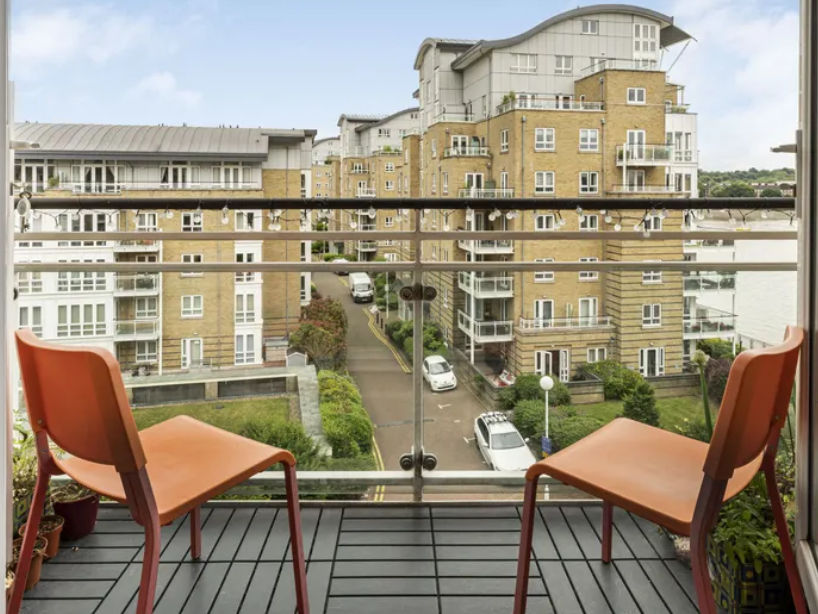
The Court of Appeal delivers the latest chapter in the long-running £500,000 dispute over the contract for eternity intercom at St David’s Square in London.
The estate, at the tip of the Isle of Dogs in London’s Docklands, across the river from the Cutty Sark and Greenwhich, has 436 flats and 40 houses.
It is managed by FirstPort. The freehold to the site is owned by NatWest Bank on behalf of the ARC Time Freehold Income Fund.
The case began in August 2021 when leaseholders argued that the costs contravened section 19 of the Landlord and Tenant Act 1985 because they were not reasonably incurred, being far too high.
The leaseholders succeeded in the FTT in 2023 but were overturned by the Upper Tribunal in 2024.
The Court of Appeal overturns the Upper Tribunal’s decision that went in favour of the freeholders.
Today’s judgment says that the Upper Tribunal was wrong to overturn the FTT because it adopted a legal test for which neither side contended and that it did not give the leaseholders a fair opportunity to address that test. The Upper Tribunal is also criticised for not considering evidence in support of the leaseholders’ case.
The case was expertly argued in the Court of Appeal by Philip Rainey KC of Tanfield Chambers. Both Mr Rainey and City law firm Velitor Law agreed to act for the leaseholders with significant discounts.
The case concerns rented intercom, television distribution and car park gates and barrier systems.
The systems are all rented from Countryside Communications, originally on 20-year terms with upward only annual rent increases linked to RPI. The contracts were imposed by the original developer Berkeley Group plc, which sold on the freehold to a ground rent investor in 2003.
The contracts carried on year-to-year unless they were terminated.
The freeholders failed to take any steps to end the contracts in July 2020, saying they had lost the paperwork and did not realise the contracts were supposed to end.
By 2018-20 the costs of these systems amounted to more than £200,000 a year, or roughly £450 per flat per year on average.
The freeholders did not dispute that the cost of renting the intercom in 2018-20 was around one-and-a-half times the cost of buying an installing a new system and that it was more than 10 times the price paid for an equivalent system at a nearby local development.
After the leaseholders brought their challenge the freeholders negotiated a discount of 50% but only from 2022. Collectively leaseholders at St. David’s Square estimate they have paid millions for these systems since 2000.
Even with the 50% discount applied from 2022 by the end of this year leaseholders will have paid the equivalent to the cost of buying and installing a new intercom. That is despite still renting a system that is more than 25 years old.
The Upper Tribunal decided in 2024 that the leaseholders’ claim failed because they had not made any argument or produced any evidence that the contract was unreasonable when it began many years ago in July 2000.
The Upper Tribunal said that there was therefore no evidence that the costs had been incurred unreasonably. The Upper Tribunal nevertheless reduced the cost of the intercom by 25% for 2020 only, a token concession from the freeholders.
The Court of Appeal disagrees.
Reversing the 2024 decision, the Court of Appeal decides that while the Upper Tribunal was right to say that one of the factors to consider is whether the contract was reasonable at the outset that is not the only factor to consider.
The other factors to consider are the nature of the goods or services being provided, the terms of the relevant contract and why the goods or services are provided on a long-term basis.
The Court of Appeal criticises the Upper Tribunal for adopting a legal test for which neither the leaseholders nor the freeholders contended and without giving either of them a fair chance to address that test.
The Court of Appeal also finds that the Upper Tribunal was wrong to find that there was no evidence in support of the leaseholders’ case. There was, it was just that they were not given the opportunity to argue by reference to that evidence.
Importantly, the Court of Appeal also decides that a landlord cannot simply point to a contract as proof the charges are reasonable and then put the burden on the leaseholders to prove that they are unreasonable, as the Upper Tribunal mistakenly decided.
Crucially for this case, the Court of Appeal decides that even where a landlord inherits a contract from a developer it must still prove the terms of that contract were reasonable at the outset.
The freeholders also fail in their alternative argument that any cost incurred under a long-term agreement is automatically deemed reasonable in amount, limiting leaseholders to challenges based only on poor quality goods or services.
Had the freeholders succeeded in that argument then it would have rendered section 19 useless.
The case will now be returned to the FTT where the leaseholders will have another chance to argue for a signficiant reduction in the costs.
The freeholders have so far dumped more than £150,000 of their legal costs on all leaseholders via the service charge and money taken from the estate’s reserve fund.
They have previously admitted breaching orders made by the FTT preventing them from doing so.
The freeholders also refused to pay any of the amounts found due by either the FTT or the Upper Tribunal until one of the leaseholders issued a County Court claim. Some of the leaseholders waited more than 18 months before they received any money back. The freeholders claimed that this was because it was “complex” to work out the credits.
This spring the freeholders sent the leaseholders a notice saying their legal costs exceeded £250,000 and they still intended to dump them on the leaseholders via the service charge.
The costs of the appeal are yet to be decided.
The freeholders face having to pay the successful leaseholders’ costs of the appeal, which are understood to be in the region of £80,000.
They may yet also be prevented from recovering any costs via the service charge.
The leaseholders hope for a decision on costs before Christmas.
In September the leaseholders asked the Court of Appeal to cap costs at either the court fees paid by the winning party or £25,000.
The freeholders opposed that application, racking up a bill of more than £14,500 for a one-hour hearing. In October 2025 the Court of Appeal refused the costs capping application.
That may now prove to be an expensive own goal.
The freeholders are two subsidiaries of NatWest Bank. They hold legal title to buildings on behalf of investors in the ARC Time Freehold Income Fund. According to ARC Time’s accounts NatWest receives around £200,000 a year in fees for providing this service.
The ARC Time fund is one of the freeholders participating in the judicial review against the Leasehold and Freehold Reform Act 2024. As LKP reported in October the High Court threw out that judicial review on all grounds.
ARC TIme recently announced its intention to seek permission to appeal its High Court loss to the Court of Appeal, perhaps as part of a super group with other freeholders.
In October 2025 a different NatWest owned freeholder for ARC Time, Freehold Managers (Nominees) Limited, was prosecuted by Birmingham City Council for failing to take steps to improve fire safety at Centenary Plaza in Birmingham.
At a hearing before Birmingham magistrates Freehold Managers (Nominees) pleaded guilty and was fined £50,000.
If the government had commenced the relevant parts of the Leasehold and Freehold Reform Act as it promised then it is possible that the landlord would not be able to use the leaseholders’ money to continue to pay its legal costs for for fighting the leaseholders.
Perhaps if the freeholders had to pay their own way the proceedings would not have been dragged to the Court of Appeal.
It is also disappointing that the leaseholders have to have another go in the FTT.
They are more fortunate than most in having neighbours who can run this sort of fight and be willing to do so for more than four years.
But ultimately no leaseholder should have to go through this kind of legal torture, which is common at large sites in the Docklands and elsewhere.
The Court of Appeal judgment and order are here:
The appeal papers for the leaseholders are here:
https://www.leaseholdknowledge.com/wp-content/uploads/2025/12/2025.12.05-Grounds-of-Appeal.pdf
The appeal papers for the freeholder are here:
Related posts:
 Spender wards off attempt to frustrate his appeal over £590,000 ‘contract for eternity’ intercom systems
 As government seeks balance in leasehold litigation costs, Liam Spender asks Court of Appeal to cap freeholder’s lawfare fees over ‘contract for eternity’ dispute
 Victory over FirstPort at St David’s Square with £100,000s to be re-payed to leaseholders over insurance and leasing of ancient door entry system
 War of attrition: FirstPort appeals St David’s Square leaseholder victory (after telling leaseholders everyone would be sharing in the win)
 Damp cycle ride on a Saturday morning leads to Building Safety Act victory in Court of Appeal
 Removing freeholders’ development value in enfranchisement – as the Law Commission recommended – is vital to reform and conversion to commonhold



















Fantastic news but it shouldn’t have been so difficult with so much evidence against the freeholders.
How tickled I am
by the Seasonal Greeting
of “Happy Christmas !”
addressed to the aforementioned disgusting leeches.
To quote Sir Ken Dodd, (acquitted),
“Good evening, my name is Kenneth Arthur Dodd; singer, photographic playboy, and failed accountant! ”
Unlike Doddy, these “failed accountants” SHOULD be behind bars, AND made to pay for their own upkeep whilst being detained at His Magesty’s Pleasure.