
By Liam Spender
The Court of Appeal has decided that leaseholders whose leases are not registered at the Land Registry must be given notice of an intention to obtain the right to manage. If they are not then the claim will fail, even if the leaseholder in question would have supported the right to manage going ahead.
The Commonhold and Leasehold Reform Act 2002 provides that if a majority of leaseholders follow the correct process then they can take over the management of their block from their freeholder. This is intended to be a simple process of giving notice without proving fault in the freeholder’s management.
The right to manage is available to any group of leaseholders with leases of 21 years or more provided they meet three conditions. First, their block must be a freestanding building or self-contained part. Second, the leaseholders must make up at least 50% + 1 of all qualifying leaseholders. Third, the building has no more than 50% commercial floor area.
Leaseholders seeking to exercise the right must give a notice to the freeholder and all the eligible leaseholders of their intention to go right to manage. If the freeholder does not object successfully then the right kicks in three months after the notice is served on the freeholder. Otherwise any dispute is resolved by the First-tier Tribunal.
Exercising the right to manage has proved to be anything but simple in practice because large freeholders, particularly Avon Ground Rents and Avon Freeholds, have taken multiple cases to the Upper Tribunal and Court of Appeal to pick holes in the legislation.
In this case, a block of 20 flats in west London sought the right to manage. They had formed six RTM companies to take over the whole of their site. In January 2022 the RTM company served notices on all the leaseholders with leases of flats registered at the Land Registry. Unknown to them, but known to Avon Freeholds, in April 2020 the leaseholder of Flat 17 had been granted a new lease. This was not registered at the Land Registry until after January 2022, the registration being backdated to July 2021. The leaseholder of Flat 17 supported the right to manage claim.
Avon Freeholds objected to the RTM company taking over as it said that the notices were invalid because the leaseholder of Flat 17 was a qualifying leaseholder and had not been given notice by the RTM company in January 2022.
In 2023 the FTT allowed the right to manage claim. The FTT decided that the absence of a notice to Flat 17 did not invalidate the claim because the RTM company had no knowledge of the lease at the time it served the notices on leaseholders. The FTT also doubted whether anyone who is not the registered legal owner of a lease at the Land Registry is a qualifying leaseholder who needs to be given a notice.
Avon appealed to the Upper Tribunal. In October 2024 the Upper Tribunal found that the leaseholder of Flat 17 was a qualifying leaseholder, but that the failure to give notice did not invalidate the claim. The Upper Tribunal said that the Supreme Court’s decision in A1 Properties meant that a minor error, such as this, could be corrected by serving a new notice without restarting the process.
The landlord appealed again to the Court of Appeal. The Court of Appeal agreed with the Upper Tribunal that any leaseholder with a lease of 21 years or more is a qualifying leaseholder, regardless of whether that lease is registered at the Land Registry.
The Court of Appeal disagreed with the Upper Tribunal on whether the lack of notice to all was fatal to the claim. The Court of Appeal found that A1 Properties did not excuse the inadvertent failure to give notice to Flat 17. That is because the Act specified that the consequences of failing to give notice to all the leaseholders meant the entire claim could not proceed, even though Flat 17 would have joined if given the chance.
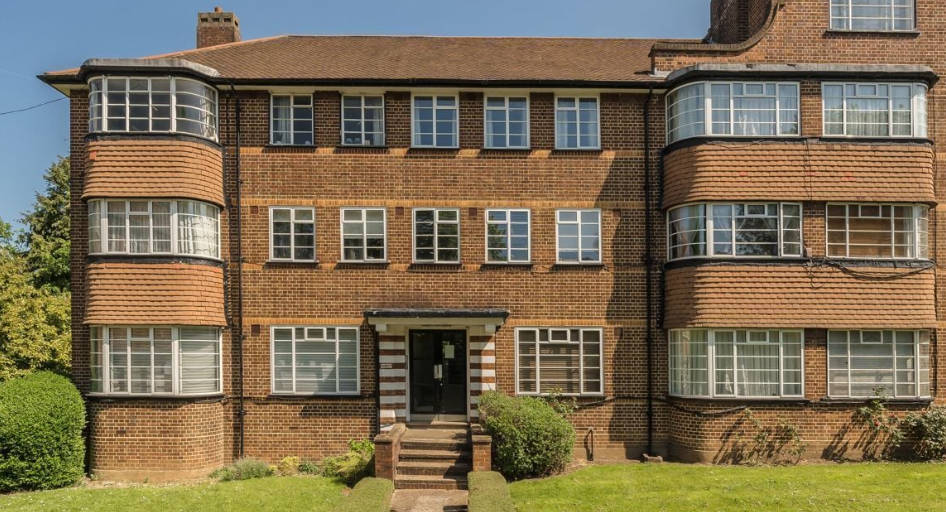
The leaseholders at Cresta Court Block E therefore have to restart the whole process, all at their expense. The process could also be undone again if it turns out there are other undiscovered leaseholders in the block.
This latest decision will undoubtedly make it much harder and more expensive for leaseholders to claim the right to manage, particularly on large estates. Anyone seeking to register a new lease or a lease changing hands at the Land Registry currently faces long delays. It is also common at large sites for their to be leases changing hands at any one time for reasons other than sales or lease extensions, such as when people divorce or separate or when leaseholders pass away.
The Court of Appeal’s decision means that unless the RTM company identifies and serves all qualifying leaseholders the process will be invalid. That is so even if the RTM company cannot tell from Land Registry records if there are leases that are not registered. If the freeholder objects on this basis then the entire process will have to be restarted, all at the leaseholders’ expense.
Unfortunately, this continues a trend of death by a thousand cuts.
In 2021 the Supreme Court’s judgment in Settlers Court limited the scope of the right to manage by saying that leaseholders on multi-block sites had to go building-by-building and could not simply step into the freeholder’s shoes.
There are also a host of decisions on what counts as a “block” and a “self-contained part”. These all make it much harder to claim the RTM. For example, where there are blocks standing over a common car park then they are treated as one even if they all have separate entrances and exits.
There is also another appeal due before the Court of Appeal in April 2026 on how and when a building is to be regarded as freestanding or a self-contained part.
There may yet be further legal issues if decisions under the Building Safety Act, which identifies higher-risk buildings based on very similar words to those used in the Commonhold and Leasehold Reform Act 2002, starts to lead to divergent decisions.
This Autumn the government is expected to bring forward a draft bill to reinvigorate commonhold. It is to be hoped that the government takes this opportunity to simplify the claim process for right to manage, to avoid issues like this arising in future.
The Bill is an opportunity to change the law so that the failure to give notice to a leaseholder of whom the RTM company is genuinely unaware does not invalidate the process. This would formalise what the Supreme Court appeared to mean in A1 Properties.
Other issues the draft bill will hopefully address are covered in the Law Commission’s July 2020 report on Right To Manage. These issues include making it easier to take over multi-block sites with a single company and allowing RTM companies to enforce lease covenants in their own name without the freeholder taking action.
The Court of Appeal’s decision is here
Liam Spender is head of real estate litigation at Velitor Law, a leaseholder and a trustee of LKP
Related posts:
 Israel Moskovitz fails – again – to appeal against the Regent Court right to manage
 Israel Moskovitz loses epic Elim Court right to manage battle in landmark Court of Appeal decision
 Court of Appeal backs rights of 200,000 shared ownership leaseholders after right to manage duel with Israel Moskovitz
Retirement site loses right to manage appeal after three years. Now what’s the cost?
Court of Appeal backs rights of 200,000 shared ownership leaseholders after right to manage duel with Israel Moskovitz
Retirement site loses right to manage appeal after three years. Now what’s the cost?
 Should the RTMF be taking the Elim Court battle for right to manage to the Court of Appeal?
 As government seeks balance in leasehold litigation costs, Liam Spender asks Court of Appeal to cap freeholder’s lawfare fees over ‘contract for eternity’ dispute


















I despair of the complex legal rules around Right to Manage. When we brought our RTM claim for our building in 2020, I asked the existing managing agent (who was an associate company of the freeholder) for the contact details for all the leaseholders. The agent hid behind data protection rules and did not assist with this request, apart from saying they would send out a general email / letter to all the leaseholders asking them to get in touch with me. I don’t think they ever did that because they had a very strong incentive to continue to manage our building.
I paid about £25 for many of the leaseholders contact addresses from the land registry which was possible with only 32 flats, near impossible on an estate with many 100s of flats. Some details on the land registry were wrong, because some leaseholders had registered themselves as living in the building but a tenant lived in their flat. Probably done for cheaper mortgage reasons. Others had moved out of the building into a 2nd home but failed to inform the land registry of this new address, and they owned the lease on a flat in the building. I tracked one down by asking tenants in the flat. That could potentially lead to a conveyancing / property fraud.
If a RTM request is made, it should be a mandatory requirement that the freeholder or their agent assists with contacting leaseholders, and that information is passed on to those organising the RTM where the leaseholder consents to this, verifying any responses.
The land registry is another body in the public realm that is not really fit for purpose or working as it should because of the long delays and issues described. Enfranchisement registration at the land registry also seems to have unacceptable delays impacting property sales.
Under Section 82 the leaseholders can make a request to the freeholder for the names of the qualifying leaseholders – if that had happened in this case presumably the freeholder would have to disclose their knowledge about Flat 17
Interested to know your thoughts
A small correction: the three-month period runs from the date specified in the claim notice for service of the landlord’s counter-notice, rather than the date of service of the claim notice.
What was the “Land Registry blunder”? Wasn’t it simply a case of the now-usual delay in registration of a leasehold?
If HM Land Registry backdated the registration of the lease to July 2021, the application to register would have shown on the application list – a matter of public record – from that date. The RTM company could have checked HM Land Registry’s records for ongoing applications before serving its notices of participation.
That said, the decisions that unregistered, equitable interests can have effect on legal processes seem odd.
It would be interesting to know how the RTM process works with a Tri-Partite Lease ,when the third party is a Residents Management Company. A small modern purpose built block with Leaseholders having equal share of the Freehold still needs to stay with the RMC Managing Agent unless they apply for RTM..
Theres a flat in my block that hasn’t registered with land registry for over five years which according to land registry is fine.
So I guess this means RTM is impossible for my block.
I dont think that is the case
You have to establish the identity of that leaseholder and the is best done by making a formal request of the freeholder under section 82 – the freeholder should know as they would have been served with notice of assignment by the incoming leaseholder as required by the lease.
Until the freeholder is served with the notice of assignment on sale that selling leaseholder is the qualifying tenant