
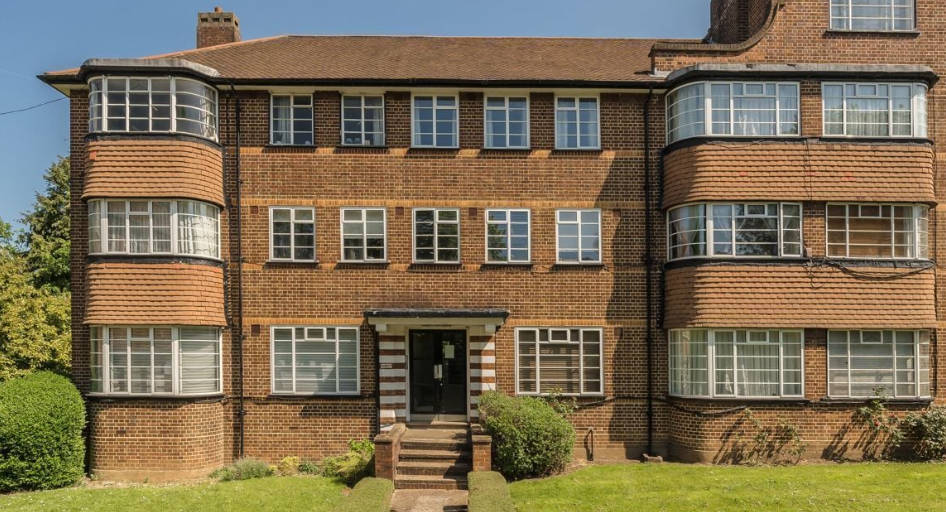
Legal stratagems to derail the right to manage application of Cresta Court in Ealing, west London, were like taking a “blunderbuss to a shooting gallery” and failed in the Supreme Court with judgement given on 27 August.
This is a blow to serial RTM litigant freeholder Israel Moskovitz, of Avon Freeholds, and his go-to RTM demolition lawyer Justin Bates KC.
Mr Bates said of the ruling: “The UKSC has handed down the Cresta Court judgment. A lot to unpack but the initial take away is that it has become much, much harder for landlords to object to RTM claims, with objections needing to be confined to substantive qualification criteria, rather than procedural failures which don’t directly affect the landlord.
“How far that goes into other areas of law remains to be seen.”
Indeed, the ruling should encourage government to firm up efforts to stop freeholders attempting to block leaseholder RTM over relatively trifling matters in its forthcoming reforms.
The RTM at 20-flat Cresta Court had succeeded in both the FTT and the Upper Tribunal before falling foul of the Court of Appeal.
The RTM had failed to give a “notice of invitation to participate” in the RTM to one leaseholder before it served its claim notice on Avon Freeholds. The leaseholder joined the application five days later.
The unanimous ruling given by Lord Briggs on behalf of the five judges in the Supreme Court was that this did not invalidate the RTM.
He ruled that the procedural requirements were clearly designed to benefit qualifying tenants. If failure to comply with them resulted in the claim notice being void, anyone (including the landlord) could rely on that failure to defeat the transfer of the right to manage.
“But that outcome seems at variance with reasonable notions of fairness or justice, and also therefore unlikely to have been intended.”
Later he added: “The main point is that invalidity … is an extraordinarily blunt weapon with which to address procedural defaults of almost limitless variety in seriousness, blameworthiness and practical consequences (if any).
“One would expect to find a discretionary means of redress in which the court or tribunal could refuse relief to someone who had suffered no prejudice from a blameless default, and a scheme for enforcement not limited (like the counter-notice procedure) to a specified class (landlords etc.) for whose benefit the rules in question were plainly not made, different from the class (qualifying tenants) for whom they were made.
“In that context, invalidity is like taking a blunderbuss to a shooting gallery,” ruled Lord Briggs et al.
The ruling is here: https://www.leaseholdknowledge.com/wp-content/uploads/2026/08/uksc_2025_0170_judgment_be9272fc1b.pdf
Press summary is here: https://www.leaseholdknowledge.com/wp-content/uploads/2026/08/uksc_2025_0170_press_summary_9e015aba3e.pdf
The Financial Times reported the case here:
Related posts:
 Land Registry blunder means Cresta Court RTM fails at Court of Appeal as notification was not served on one leaseholder – who actually supported right to manage
 Israel Moskovitz loses epic Elim Court right to manage battle in landmark Court of Appeal decision
 Ruling blasts Israel Moskovitz’s lawyers for ‘wasting tribunal time’ in legal warfare that is ‘part of a pattern’, as RTM gains control of £69,000 funds
 Epic leasehold battle ends with victory of freeholder in the Supreme Court
 Not waiting for Gove: Kelly Tolhurst MP urges freeholder Israel Moskovitz to halt court action against leaseholders over £2m cladding and building safety costs
 Coppen Estates cops it for over-padding insurance admin costs. Other Coppen leaseholders should do the same, say litigants



















Congratulations to Cresta Court,
Absolutely first class. You have collectively achieved what will become an “Historical Ruling” that will enable tens of thousands of “Fleeceholders” to obtain Right to Manage, in my opinion.
Thank goodness common sense has prevailed, which was sadly lacking in the CoA decision – in which a few judges well past their use by date thought they’d disregard the reasoned obiter of the SC thinking they knew better – or to point score, who knows, but it was plainly a nonsense decision.
It’s also good to see an end to a particular barrister’s reign of being the king of RTM technicalities. How many failed RTMs have there been that would (& should) have succeeded had the SC case been 10-15 years ago? Barristers’ and solicitors’ pockets have been filled at the expense of everyday people who just wanted to be able to have a say in how their flat is managed.
Going up to the Supreme Court involves substantial legal cost, I suppose. I understand that with the recently enacted law, the leaseholders at Cresta Court did not have to pay the freeholder’s legal costs, but still had to bear their own legal costs. It appears there were only 20 leaseholders involved: how did they manage to pay the legal costs to go from the FTT to the Supreme Court? Did some lawyer act pro bono for them?
Fantastic news for a change!!
All fleeceholders need to be put in their place!!
Great news and truly amazing for the leaseholders being able to escape from a greedy freeholder who only looks upon them as nothing more than a cash machine.