

Court of Appeal throws out RTM at Liverpool’s Plaza Boulevard because of the common car park below
But the same sort of arguments failed at prime London Regent’s Park site 14 Park Crescent
And failed again in the Upper Tribunal at Manchester’s Skyline Central
Meanwhile, the Supreme Court is to consider whether an RTM should fail because a leaseholder – who actually supports RTM – was not notified, owing to registration delays at the Land Registry
And so it goes on and on at ruinous expense to the delight of leasehold lawyers, while we wait interminably for reform …
By Liam Spender
Last week the Court of Appeal gave judgment on two right to manage cases in London and Liverpool in the cases of The Courtyard RTM Company v. Rockwell (FC103) Limited and Grey GR Limited and 14 Park Crescent v. 14 Park Crescent RTM Company Limited.
The Liverpool leaseholders were trying to take over the management of their blocks from RailPen, the railways pension fund.
The London leaseholders were trying to wrest control from a private developer who still owned the freehold.
The right to manage was introduced by the Commonhold and Leasehold Reform Act 2002. It gives the right to leaseholders to take over management functions in relation to a building or a self-contained part of a building.
The leaseholders must form a company with at least 50% + 1 of all qualifying leaseholders as members / shareholders. To be a building or self-contained part it must be capable of being redeveloped independently of anything else. The appeals concerned the legal test for what counts as a building and what counts as a building that can be independently redeveloped.
The right to manage does not give leaseholders the right to step into their landlord’s shoes, even if a group of buildings is currently managed as one estate. This causes issues where there are shared facilities with common examples being car parks, gardens and gyms.
The right to manage regime is bedevilled by the technical complexity of definitions of building and self-contained part. There have been very few decisions on the meaning of building or self-contained part.
On complicated sites there is often a need for costly engineering reports to be prepared to determine whether a building is a building. Landlords also contest whether the right legal notices have been served in the correct form.
The Liverpool cases concerned three blocks at a large development known as Plaza Boulevard: The Courtyard, The Studios and The Terrace. The three blocks were part of a large site in central Liverpool.
They had all been developed independently at different times, but were structurally attached to the same concrete podium foundation. The podium extended far beyond the three blocks. A large basement car park sat under the blocks. Supports for the steel frame of the buildings projected down into the car park. The car park spaces were allocated to people in different blocks and some of the spaces could also be used by the general public.
The Court of Appeal agreed with RailPen that the three blocks were not buildings eligible for the right to manage because they were not structurally detached from the basement car park. The Court of Appeal said the site would be impossible to manage properly if the management of the car park were to be separated from the blocks.
The Court of Appeal disagreed with RailPen that it would also be impossible to develop any of the three blocks independently of the others because any redevelopment would require some structural support. The fact that this would be practically difficult and require coordination and consent from neighbouring properties did not mean it was impossible. It was also possible to redevelop only a small part of each block and come within the test for independent redevelopment.

The London case concerned 14 Park Crescent, near Regent’s Park. Originally designed by John Nash in the Regency era as a residential crescent, the building was converted to offices in the 1960’s and was also formerly the Bloomsbury and Marylebone County Court.
In 2015 the whole of Park Crescent was reverted to residential flats and extended to join with neighbouring mews houses at 8 Crescent Park Mews.
During its redevelopment 14 Park Crescent had been stripped back to a 1960’s steel frame with a new basement added and the original facade maintained. During the redevelopment the foundations were dug out and expanded beyond their original footprint and a basement was added.
The original facade was subject to expansion joints that did not follow the lines of the party walls between different buildings. The leaseholders in Number 14 claimed the right to manage.
In the Park Crescent case, the Court of Appeal agreed with the leaseholders. The landlord was wrong to say that Park Crescent was not a building because of its structural links to the mews houses, the facade and expansion joints not matching the party walls and the fact that its foundations extended under other buildings. The Court of Appeal found that Number 14 could be vertically separated from the mews houses by the 1960’s steel frame. The fact that there would be practical or legal obstacles to redeveloping Number 14 separately from the Mews Houses did not prevent it from being eligible for the right to manage.
In both cases the Court of Appeal also rejected the landlords’ arguments that any balconies or other overhangs breaking a vertical line from the ground to the sky would prevent a building claiming the right to manage. The Court of Appeal agreed with the Upper Tribunal that there was no legal basis for such a restriction.
The judgment will stand unless it is appealed to the Supreme Court.

Also last week, the Upper Tribunal gave judgment in Adriatic Land 3 v Skyline Central One RTM Company Limited.
Skyline Central is a building in Manchester, one of two towers built at different times. Adriatic Land 3 is managed by HomeGround, part of Long Harbour.
In Skyline the Upper Tribunal decided that the existence of a basement car park did not prevent the right to manage being exercised. The distinction between this case and the Liverpool Plaza case is that the Skyline included the whole of the underground car park as part of the relevant building it was seeking to take over because it was all part of the same structure.
Adriatic objected on the basis that there were legal agreements with other users of the car park to which Skyline was not a party. Adriatic said this would prevent the full cost of the car park being collected by Skyline.
The Upper Tribunal found that this was not an issue preventing exercise of the right to manage. Skyline would have to make its own arrangements with the other building, or else come to an agreement with Adriatic Land 3. The need to make agreements did not prevent the car park being part of the relevant building.
Another potentially important case threatens further to restrict the right to manage.
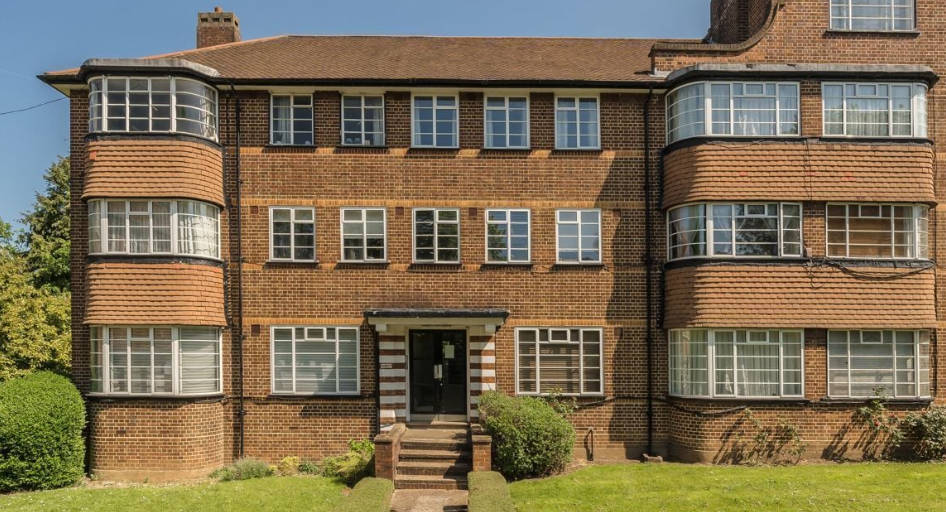
On 7 July 2026 the Supreme Court is due to hear an appeal in the case of Avon Freeholds Limited v. Cresta Court E RTM Company Limited. Cresta Court is a building owned by Avon Freeholds. The appeal will be live-streamed on the Supreme Court’s website.
The issue in dispute is whether the right to manage claim is invalid because one of the leaseholders, Ms O’Connor, did not receive a notice from the RTM company informing her that the RTM company intended to claim the right to manage over the block and inviting her to participate in the RTM company.
Ms O’Connor agrees with the right to manage.
The notice was not received by Ms O’Connor because, despite her lease being granted directly by Avon Freeholds in April 2020, the Land Registry had still not processed the registration of the new lease by January 2022, when the RTM company claimed the right to manage.
The Land Registry delay may have been because Ms O’Connor (or her solicitor) did not make an application to register the new lease until July 2021.
Avon was aware it had granted a new lease that had not been registered at the Land Registry but apparently waited until after the RTM claim notice had been served to take the point that not all leaseholders had been notified. The Land Registry record had shown a pending registration since July 2021.
It does not appear that the RTM company checked whether there was a pending registration against the freehold title before proceeding with its notice or, if it did, whether it had considered whether it should take any steps to identify who was behind the pending registration.
In 2023 the First-tier Tribunal upheld the claim to the right to manage. The landlord appealed to the Upper Tribunal. In 2024 the Upper Tribunal found that whilst Ms O’Connor should have been given notice because she held an equitable lease this was not fatal to exercising the right to manage, so it dismissed Avon Freehold’s appeal.
Last year the Court of Appeal found that the claim to right to manage could only go ahead if every leaseholder was given a notice to participate, including any holders of equitable leases. The Court of Appeal allowed Avon’s appeal and refused the right to manage.
The Right To Manage Company has now appealed to the Supreme Court, but only on the question of whether the lack of a notice to Ms O’Connor means the right to manage claim cannot proceed.
The case is vitally important. On large sites there will always be at least some flats where the current leaseholder is not recorded on the Land Registry because of delays in updating titles at the Land Registry, whether due to death, sales or because because new leases have been granted as part of a lease extension.
If the Supreme Court upholds the Court of Appeal then it will make it much harder to claim the right to manage because any RTM company will have to track down these leaseholders and serve them with participation notices before the right to manage claim can proceed.
In 2022 the Supreme Court allowed an appeal brought by FirstPort against the right to manage at Settler’s Court, a development across the Thames from the O2 in London.
The Supreme Court found that a landlord (or embedded managing agent) could keep control over common parts (appurtenant property) that were not used exclusively by the building claiming the right to manage.
The appeal was supported by The Property Institute, who intervened to make arguments in support of FirstPort’s position.
The Settler’s Court decision meant that on large sites with complicated arrangements a landlord or embedded managing agent could keep collecting service charges for those parts.
Settlers Court shows the limits of the current right to manage regime because leaseholders cannot simply step into the landlord’s shoes. There have been reports of landlords and managing agents taking back parts of sites that had previously claimed the right to manage following Settler’s Court.
In July 2020 the Law Commission made recommendations to improve the right to manage to avoid disputes of this type, including making it easier for sites with shared amenities to claim the right to manage, which may have addressed the issues encountered in the Settler’s Court, Plaza Boulevard and Skyline cases.
These cases all illustrate the need for the government to implement the Law Commission’s proposals.
Some of the Law Commission proposals, including abolishing the right of landlords to claim their legal costs and making more buildings eligible by raising the threshold of commercial floor space from 25% to 50% were implemented in 2025.
The other reforms proposed by the Law Commission have not yet been implemented. In April the government said that these reforms may not come forward until time can be found for a separate Act of Parliament.
The Housing, Communities and Local Government Select Committee recently reported on the draft Commonhold and Leasehold Reform Bill and recommended that the government bring forward right to manage reforms as part of that bill.
Former Law Commissioner Professor Nick Hopkins prepared a table in the Select Committee’s report identifying which reforms could be included in the bill. The government has not yet said whether it will accept the Select Committee’s recommendations, but it has announced it will speed up the implementation of the £250 cap on ground rents so it comes into force in 2027. The government’s full response is due before Parliament starts its summer recess in July.
The government should also look at simplifying the statutory notice process and providing for solutions if not all leaseholders can be served.
The most effective reform would be to abolish the requirement to serve participation notices at all, as the Law Commission has already recommended.
Provided the RTM company has the requisite number of qualifying leaseholders as members it should be allowed to exercise the right and it can be required to add any other leaseholders as members once it has taken over management functions.
If the participation notices are to stay then a second potential practical reform is to require landlords, who are in a better position to know of any changes than leaseholders, to disclose any pending transactions regarding a change of proprietor of which they are aware and to provide for any missed notices to be excused provided the leaseholders have a good excuse for not serving, for example because neither the landlord nor the Land Registry is aware of a change.
A wider-ranging reform would be to require landlords of all eligible blocks not currently managed by leaseholders to hold periodic ballots on whether those blocks should move to resident control.
If a majority voted in favour the landlord would be obliged to connect them so they could fulfil the statutory criteria for obtaining the right to manage.
The Courtyard, Plaza Boulevard, Liverpool, RTM case is here:
The Skyline Central Manchester RTM case is here:
The Cresta Court RTM case is here:
Related posts:
 Land Registry blunder means Cresta Court RTM fails at Court of Appeal as notification was not served on one leaseholder – who actually supported right to manage
 Right to manage woes at Elim and Regent Courts retirement sites
 Time for the tribunal to dismiss trivial objections to right to manage after Elim Case
 Retirement site loses right to manage appeal after three years. Now what’s the cost?
 Terrys Mews right to manage fails for not knowing Peverel OM is now FirstPort
 How freeholders are manipulating government data to block reforms